
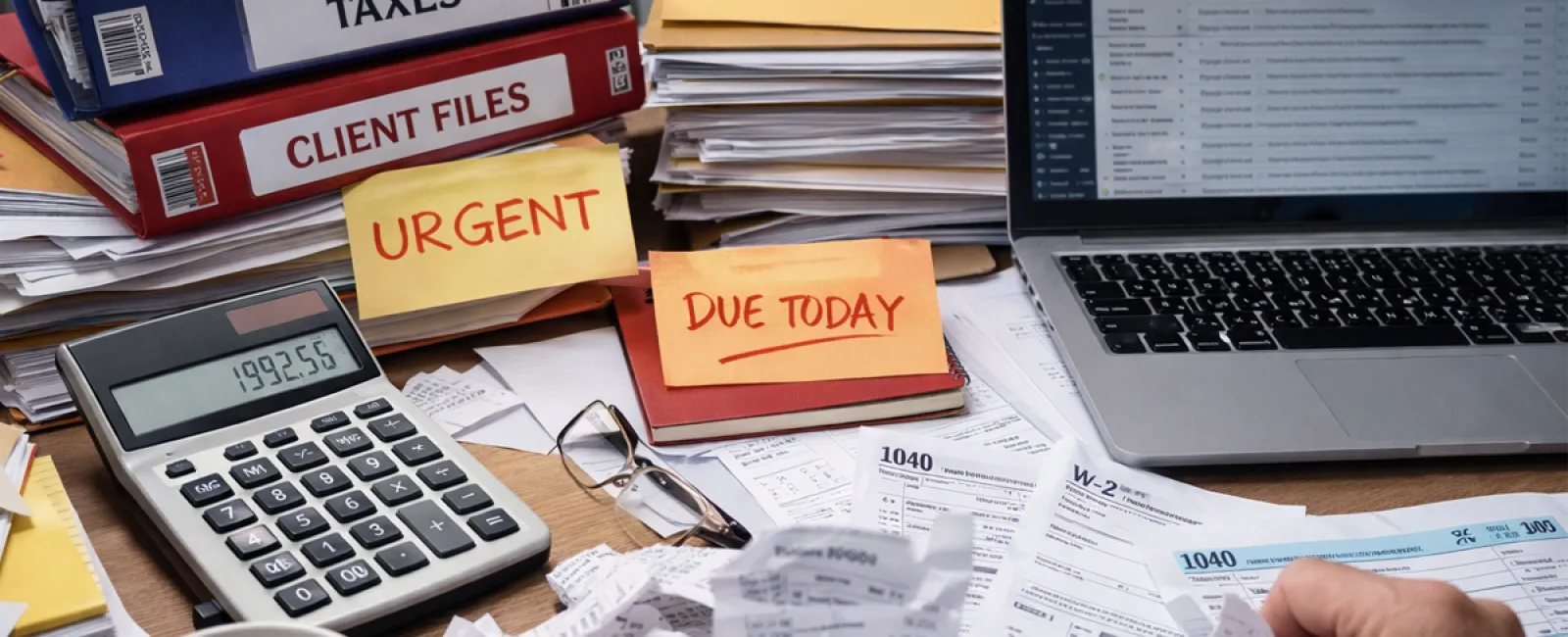
March is here.
Your accountant is overwhelmed. Your bookkeeper is rushing. Deadlines are pressing. Emails are pouring in faster than anyone can manage.
Everyone is focused solely on pushing through the month.
This may be familiar.
But hackers are well aware of this too.
Security experts consistently observe a dramatic rise in phishing attacks during tax season, with March experiencing roughly a 28% surge in tax-related scam emails compared to slower periods. These scam emails are subtle, crafted to blend seamlessly with routine business communications, striking when people are at their busiest.
This is no accident.
This is strategic timing.
Here's what to expect and four actionable steps to protect your business from becoming an easy target.
Pressure Cooker Supply Chain
Many overlook this crucial point:
Cybercriminals aren't only going after accounting offices.
They exploit the chaos enveloping the entire system.
During tax season:
- Clients hurriedly submit sensitive documents
- Staff skip standard checks to keep pace
- Requests like "Just send me the file" replace usual caution
- Verifications get bypassed due to overwhelming workloads
The entire workflow accelerates.
And in speed lies vulnerability.
Hackers don't target calm, methodical businesses.
They go after the busiest.
March is peak activity.
Recognizing These Attacks
This isn't fiction.
It's an email indistinguishable from those already in your inbox.
- An email from "your accountant" requesting W-2s to be resent due to a supposed transmission error
- A vendor's notification about changed banking details needing urgent update
- A DocuSign request demanding immediate signature on tax paperwork
- An urgent plea from "your CEO" traveling and requiring swift assistance
These appear routine.
They feel like typical business for March.
That's exactly why they succeed.
Why Even Busy Professionals Fall Victim
This isn't about carelessness.
This is about human nature.
When inboxes overflow and deadlines tighten, people skim rather than read fully. They assume and react quickly.
Scammers understand this well.
Their emails are tailored for those moving too fast to spot subtle inconsistencies. They don't rely on recklessness—just on your hustle.
And in March, everyone is hustling.
Four Easy Steps to Stay Protected
The good news? You don't need expensive software or dedicated security staff to lower your risk.
Implementing a few mindful habits during high-pressure months goes a long way.
1. Confirm payment updates by phone
If an email announces a vendor's bank info has changed, avoid replying directly.
Call a known, trusted number to verify.
This simple step blocks some of the costliest scams.
2. Take your time on sensitive data requests
Urgency is a cue to pause—not to hasten.
If asked for W-2s, tax forms, or financial info "immediately," take a moment to verify.
Legitimate contacts will wait; scammers won't.
3. Validate "urgent" asks via another channel
If an email demands urgent attention, double-check through a phone call, text, or internal chat.
This quick step can prevent costly mistakes.
Real urgency holds up under scrutiny; fake urgency disappears.
4. Alert your team briefly
This week, remind your team that tax season invites scams.
Encourage them to slow down, verify, and ask questions if something doesn't feel right.
This small mindset shift stops many problems before they start.
Final Thoughts
Tax season is demanding enough without falling prey to a scam.
The scams at this time aren't intricate—they're perfectly timed.
They exploit rushed actions.
They exploit assumptions.
They thrive when everyone is trying to push through March.
You don't need system overhauls to avoid becoming an easy mark.
Just slow down strategically and confirm urgent matters.
That's often enough to stay safe.
Quick Tax-Season Security Review
Your business may already have strong safeguards, which is excellent.
However, if tax season tends to push your team into reactive haste, or if you're uncertain how they handle urgent requests under stress, consider a free 15-Minute Discovery Call consultation.
No pressure, no gimmicks—just clear advice on simple habits that can prevent big headaches this season.
If this message isn't relevant for you, please share it with someone it will help.
Click here or give us a call at (918) 770-9150 to schedule your free 15-Minute Discovery Call.


